Table Of Content

Try L’Oréal Paris Elvive Total Repair 5 Power Restore Multi-Use Treatment. The protein-infused formula helps strengthen damaged hair, leaving it looking and feeling silky. Slip on your protective gloves and thoroughly shampoo your hair with lukewarm water to remove every last trace of bleach. Most kits come with an extra nourishing conditioner, but you can also reach for a product like the L’Oréal Paris EverPure Sulfate-Free Bond Strengthening Conditioner. Pair it with the corresponding shampoo; together, the fortifying line can help strengthen hair from the inside out—perfect for repairing bleached locks.
Beauty
Both honey and vinegar have bleaching properties which help lighten your hair. Using this treatment will lighten your hair by at least one shade. The only way to avoid these risks is by using natural remedies for hair bleaching. Learn how to prep your hair for using them in the next section. The adrenaline rush that comes from whitening your hair is unrivaled. However, the damage done to your hair when you use bleaching powder for hair is also significant.
White Blonde Hair: How To Bleach Hair White Blonde & Best Products - GLAMOUR UK
White Blonde Hair: How To Bleach Hair White Blonde & Best Products.
Posted: Thu, 04 May 2023 07:00:00 GMT [source]
Step 8: Toner (Optional)
How to bleach your hair at home - British GQ
How to bleach your hair at home.
Posted: Fri, 16 Jul 2021 07:00:00 GMT [source]
Saturating your hair with the tea will help lighten your hair and add subtle highlights. When used in combination with olive oil, it helps condition your hair while lightening it. “You’ll want to examine your hair and make sure that it’s in optimum condition, meaning it’s in good health and strong enough to handle the process,” says Jackson. If you see a lot of splitting, dryness or weakened ends, hold off on the bleach, which can cause more damage and even breakage. Again, under most circumstances, DIY bleaching isn’t advised and is a job that’s best left to professionals.
Shampoo, Rinse, and Moisturize
You may think visiting a colorist is the only way to achieve the shade pinned to your vision board, but that’s far from the only option nowadays. Innovations in at-home bleaching products have also made it possible to give you salon-worthy results while upholding the integrity of your hair. Knowing the proper way to do it, though, can make all the difference. And for the record, we highly advise you go with the colorist, if it’s within budget. The pros are educated in the arcane sorcery that is bleaching and dyeing, plus they have the good stuff that gets you the sharpest color.
In general, healthy virgin hair tends to lighten more quickly since it hasn’t undergone any chemical processing. First-timers should be especially cautious about letting bleach sit for longer than necessary. The same goes for fine hair types, as fine strands lift faster than thick or coarse ones.
Step 5: Add Toner to Hair
But here is the list of products you’ll need for this specific tutorial, with added input from Norris. Since this is an at-home hair job, it might look different than what you thought, but embrace that you did it by yourself and rock it with pride! In case you're still nervous or unsure, here's a round-up of YouTube videos that can help you on your blonde journey. Brown eyes are one of the most common eye colors in the world.
Apply the Bleach
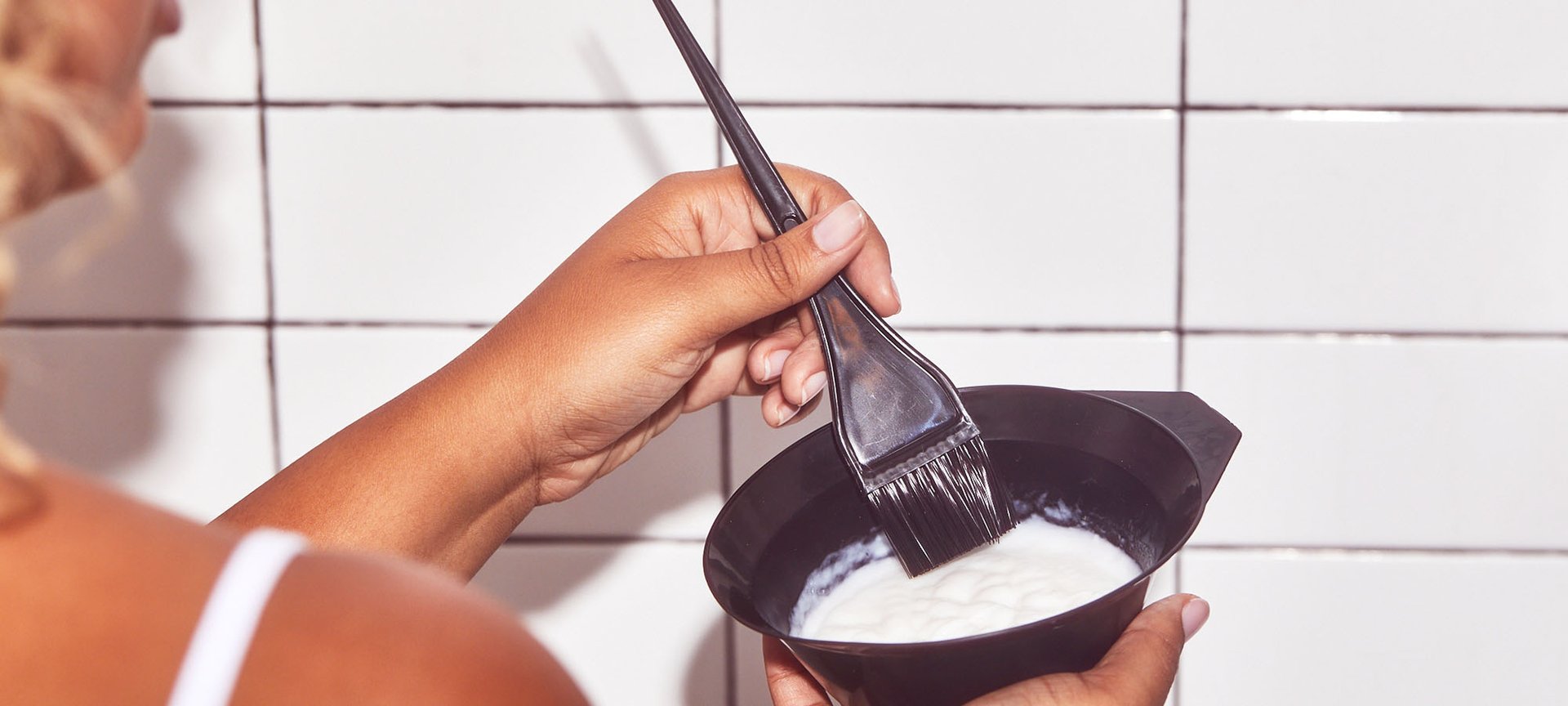
Each section should be clean and well delineated from the next so you can easily apply the bleach without overlapping it onto the hair. Mix the bleach with the liquid developer in a bowl to create a single solution. Adding developer to bleach forces open the hair's cuticle to lift away the existing color and allow it to lighten. New York City-based colorist Aura Friedman, who works with celebrities such as Lady Gaga and Sky Ferreira, also suggests skipping an at-home bleach attempt. "When you bleach your own hair, it's almost impossible to not overlap on already bleached hair, which means you could have a lot of breakages, it's just not worth the risk," says Friedman. That said, bleaching at home is considered ill-advised by professionals.
Our Foolproof Skincare Routine for All Skin Types
The salt in the seawater, in combination with the heat of the sun, helps lighten your hair. You can get the same results at home with a tablespoon of salt. Baking soda is one of the most versatile ingredients that you can find in your kitchen. It is an effective bleaching agent which helps lighten your hair. It is also used as a mild hair cleanser and as a teeth whitener.
Bleaching Hair at Home: Do’s and Don’ts, According to a Hairstylist
When you’re able to get to the salon again, Tang recommends asking your stylist for the #Mydentity #Myhero Collagen Treatment to help with hair elasticity, as well as an Olaplex treatment for strengthening. “The big questions you have to ask yourself are, how hydrated is my hair? When was the last time my hair was colored, bleached or received an in-salon service," Tang advises. Your answers should determine whether or not to move forward. The L’Oréal Paris skincare range is packed with all-star anti-ageing ingredients, from retinol, to vitamin C and hyaluronic acid. Below, we help you formulate your personalised skincare routine for anti-ageing, by highlighting which products and ingredients to include in your regime, plus the key benefits for your skin.
Other key factors to consider are your desired level of lightness and your base color. Subtle changes don’t require as much processing time as dramatic lightening transformations would. This is especially true if you’re starting with a dark brown to black base.
The hair close to the scalp processes faster due to your body heat, so you risk making the first inch of your hair look a level lighter than the rest of the hair. To avoid “hot roots”, apply the product one inch away from the scalp on the entire head. Applying this mixture evenly throughout your hair and leaving it on for 15 minutes to one hour (depending on how dark your hair is) can give you the desired results. While this is not a natural remedy, using peroxide to bleach your hair is much safer than using bleach. This treatment significantly lightens your hair without damaging it as bleach does.
Going from dark brown to lighter strands is a high-impact transition, and this is about both your hair condition and your new look. Even without major lifting, bleach treatment often results in a dry and rough texture, and brassy tones start to creep in soon. However, it doesn’t mean that you need to refuse from getting the platinum blonde of your dreams.
Bleach developers have measurements of 20-, 30-, or 40-volume peroxide, Norris notes. But the higher the volume, the more risky and damaging it is to the hair too. The darkest hair will require 40-volume—be very careful not to wear it too long, she warns, or you’ll be peeling out chunks of broken hair. We would almost go so far as to say that no one should use 40-volume developer at home.
The duo deeply replenishes dry hair with twice as much moisture, is gentle on color-treated strands, and keeps color pure for up to four weeks. Last but not least, the type of developer (hydrogen peroxide that aids in the bleaching process) you use can influence how long bleach should remain on your hair. Developer is available in different volumes; lower volumes typically require a longer time to work their magic, and vice versa for higher volumes. Be sure to read (and re-read) the instructions on the box for a more accurate look at how long to leave your lightener on.
Get ready to make tending to your bleached hair your new favorite hobby, because the maintenance here is no joke. After the appointment wraps, most colorists send clients home with a color-safe shampoo and conditioning mask in hand, along with a brand new haircare routine and instructions. If you do end up running into trouble while bleaching your hair at home, it's best to consult with a colorist rather than attempting to fix it yourself. "If it's too yellow or orange, it will require more bleaching. If it is uneven because of a sloppy or uneven application, it will be very difficult to fix without going darker," Papanikolas shares. "When it comes to bleaching your hair, being completely honest with your hair colorist about every chemical treatment you've had done is key," she continues. "It's better to know in advance what we are up against and how to prepare for it, than to be surprised later."